
The Method

Touch Is All-Inclusive. Everyone Is a Candidate. All You Need to Begin Is a Functioning Pair of Hands.

Size and strength play no role in it — just a willingness to become aware of your hands and feet.

Intro to Touch Practice

What Golfers Need — And How Touch Teaches It

To begin, all you need is a functioning pair of hands.

Most golfers run into the same wall: they don’t know how to practice, or what to practice. Touch changes that. Ten minutes a day, twice a day, is enough to begin reshaping a complete swing in 21 days — because touch taps into the entire swing and the club through the hands. The hands are the conduit.

Gary Battersby introduces the Learn Touch Golf program.

Touch Swing with Kinematic Flow

Gary Battersby

The entire body moves in perfect sequence.

Coining “Kinematic Flow”

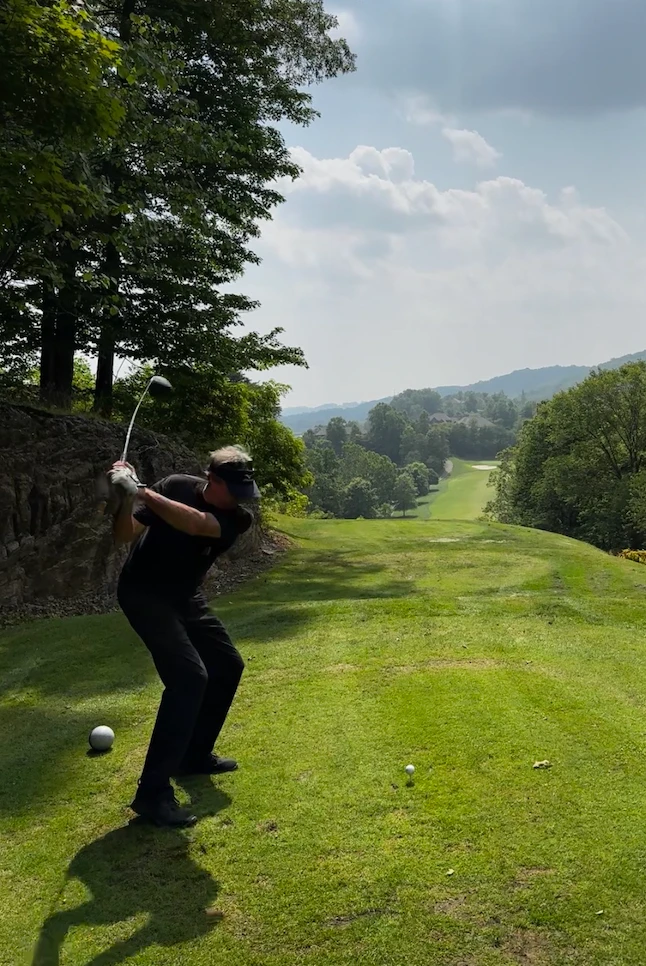
Gary Battersby starting the downswing

Gary Battersby first coined the term “Kinematic Flow.” It describes the direction and sequence of the swing movement based on rhythm and tempo in each direction. He relies heavily on visualization and feel feedback for the flow to continue uninterrupted — like a slinky, never rushed or out of sync. It creates the ultimate touch swing.
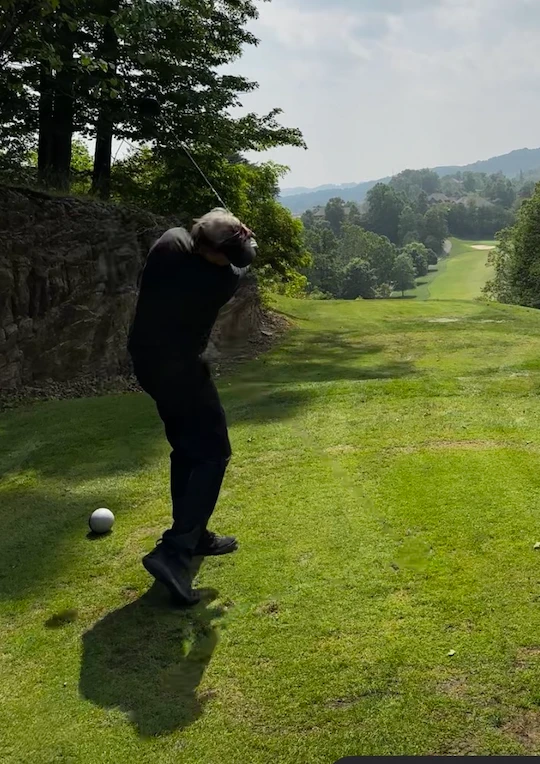
Gary Battersby through the swing

How Fast Touch Can Work

This is Alex. When learning happens through touch — through feel — rather than a checklist of positions to consciously manage, the body adapts remarkably fast. There’s no list of swing thoughts to hold onto. The hands learn what right feels like, and the rest follows.

Before

After

2 days later

Touch golf taps into an extraordinary human property: the ability to make something inanimate seem animate — like a hammer to a master carpenter.

Touch golfers have a luxury that others rarely feel: knowing they’re confident in their abilities. They have no problem transferring their swings to the course. Touch golfers rely on the automatic brain to perform — they simply read the feedback of their feel, never reinventing explicit instructions to balance their movement.

Touch golf has very few rules to follow. A touch swing comes alive precisely because it is not interfered with by thinking explicitly. In the Touch Method, implicit learning is taught from the very beginning.

“Touch golfers rely on automaticity — like an invisible orchestra conductor. Gary has learned how to teach a golfer to tap into that automatic conductor, which completes the behind-the-scenes work without having to know how or why. Touch practice helps a golfer achieve this remarkable human property of becoming one with the club — and all its relations to the ball, the ground, and the target.

In short, through the Touch exercises and imagery of the kinematic flow, the automatic brain achieves the goal — it synchronizes and fine-tunes the entire movement. And as Robert Bjork, Rich Masters, and Gabriele Wulf would say, that makes it retrievable, and therefore performable.”

Rich Masters, of the University of Waikato in New Zealand, calls this reinvestment theory — the idea that consciously stepping back into the mechanics of a well-learned movement, especially under pressure, disrupts the very automaticity that makes it work. The swing that’s been earned through touch doesn’t need to be thought through. It needs to be left alone.

Gary’s swing, set to his brother Edmund Battersby performing Mendelssohn’s Songs Without Words. Two crafts. One kind of touch.

An effective golf swing is about refining the coordination and timing of the movement. In most cases, increased bulk and strength become an inhibitor to the fine-tuning — and to the conductor.

When a golfer learns the kinematic flow of the swing, the automatic brain performs like a slinky — the order of action remains intact always. It is effortless.